
A useful checklist needs a finish line. This plan groups the work into short rounds so the important safety and maintenance jobs are completed before energy disappears into cosmetic details. Fall maintenance should stop water, drafts, and small safety failures before freezing weather.
Set the boundary before the timer
Fall maintenance should stop water, drafts, and small safety failures before freezing weather. Choose the supplies and exit route first, including where recycling, donations, debris, or repair notes will go.
Round one: the high-value checks
Inspect the roof from the ground
Inspect the roof from the ground. Fall maintenance should stop water, drafts, and small safety failures before freezing weather.
Try the change under ordinary conditions, not only in a freshly tidied room or on an unusually mild day. If it creates a new obstacle—extra storage, a blocked route, more runoff, or fussy setup—adjust it while the cost and effort are still small.
Leave access for the next routine task. Watering, sweeping, mowing, opening a door, removing a cushion, or reaching a shutoff should not require dismantling the improvement. That practical clearance is part of the design, even when it is not visible in a photograph.
Stop and reassess if the work reveals damaged wiring, structural movement, persistent moisture, unstable branches, or equipment you cannot reach safely. Those are not useful places to improvise. Inspect a roof from the ground and call a qualified professional for unsafe access or damage.

Clean gutters after leaves drop
Inspect a roof from the ground and call a qualified professional for unsafe access or damage. That is the practical reason to clean gutters after leaves drop.
Use sight, touch, and simple measurements before following a schedule by habit. Exposure, soil, weather, material, and household routines all change the right answer. The evidence in this particular space should decide whether to continue, pause, or try a smaller adjustment.
Recheck the area after a weather change and after a busy day. Those two moments reveal weak points that a calm test misses. If the setup still feels natural then, it is much more likely to last through the season.
More is not automatically better. Extra water, light, fertilizer, furniture, storage, or decorative layers can hide the original problem and add maintenance without improving daily use. Exterior faucets and irrigation lines need attention before the first hard freeze in cold climates.
Seal obvious drafts
Treat “seal obvious drafts” as a decision, not a decorating rule. Exterior faucets and irrigation lines need attention before the first hard freeze in cold climates.
Plan for the least convenient day, not the ideal one. A solution that works only when there is plenty of time, perfect weather, or an empty room will soon be abandoned. Remove steps until the useful part fits the routine you already have.
Change one variable at a time, then live with it long enough to notice the result. Photographing the starting point or writing down a quick measurement makes subtle improvement easier to see and prevents you from undoing a good decision too soon.
Keep product instructions and local conditions in the decision. Climate, building details, water restrictions, and material warranties can set limits that a general guide cannot see. Smoke and carbon-monoxide alarms deserve a deliberate test, not a glance at the indicator light.
Round two: clean, edit, or repair
Schedule heating service
Schedule heating service matters because the first visible symptom is not always the underlying cause. Smoke and carbon-monoxide alarms deserve a deliberate test, not a glance at the indicator light.
Begin by looking at the area during the hours it is normally used. Note one useful piece of evidence—a moisture reading, the direction of the sun, the width of a route, or the time a chore actually takes. That small observation gives you something firmer than a shopping list or a fixed calendar date.
Avoid turning this step into a makeover. Use what is already on hand first, borrow or reposition something if that will answer the question, and buy only after the missing function is clear. The best result is usually quieter and easier to maintain than the first idea.
Stop and reassess if the work reveals damaged wiring, structural movement, persistent moisture, unstable branches, or equipment you cannot reach safely. Those are not useful places to improvise. Fall maintenance should stop water, drafts, and small safety failures before freezing weather.
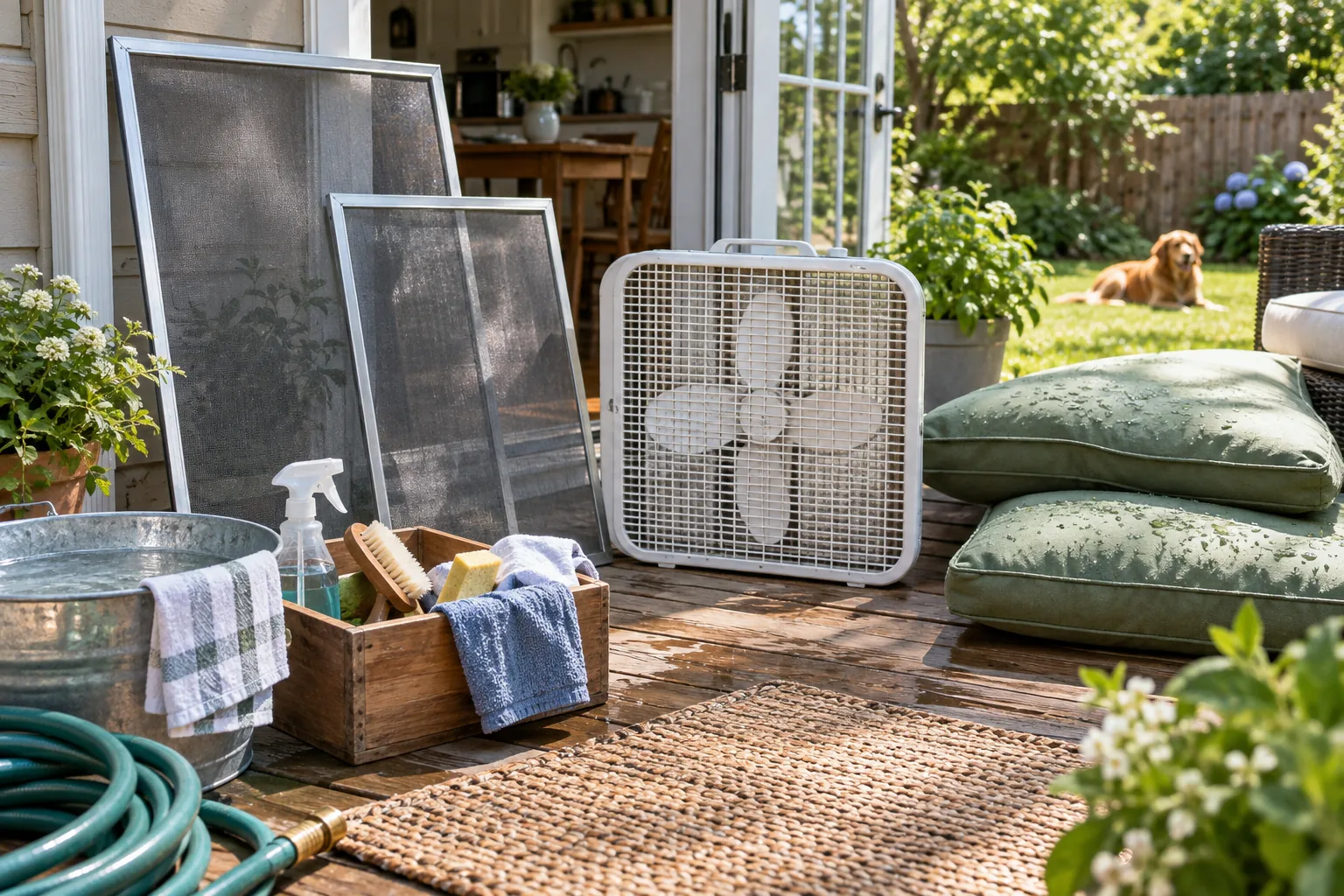
Protect exterior faucets
The useful version of this step is modest and measurable. Fall maintenance should stop water, drafts, and small safety failures before freezing weather.
Give the job a boundary before starting. It might be one bed, one seating zone, one drawer, or a single maintenance round. Gather only what that boundary calls for, and decide where tools, debris, donations, or wet materials will go when the work is finished.
Leave access for the next routine task. Watering, sweeping, mowing, opening a door, removing a cushion, or reaching a shutoff should not require dismantling the improvement. That practical clearance is part of the design, even when it is not visible in a photograph.
More is not automatically better. Extra water, light, fertilizer, furniture, storage, or decorative layers can hide the original problem and add maintenance without improving daily use. Inspect a roof from the ground and call a qualified professional for unsafe access or damage.
Test safety devices
Do this before reaching for another product or starting a larger project. Inspect a roof from the ground and call a qualified professional for unsafe access or damage.
Try the change under ordinary conditions, not only in a freshly tidied room or on an unusually mild day. If it creates a new obstacle—extra storage, a blocked route, more runoff, or fussy setup—adjust it while the cost and effort are still small.
Recheck the area after a weather change and after a busy day. Those two moments reveal weak points that a calm test misses. If the setup still feels natural then, it is much more likely to last through the season.
Keep product instructions and local conditions in the decision. Climate, building details, water restrictions, and material warranties can set limits that a general guide cannot see. Exterior faucets and irrigation lines need attention before the first hard freeze in cold climates.
Final round: reset and record
Prepare a simple storm kit
Prepare a simple storm kit. Exterior faucets and irrigation lines need attention before the first hard freeze in cold climates.
Use sight, touch, and simple measurements before following a schedule by habit. Exposure, soil, weather, material, and household routines all change the right answer. The evidence in this particular space should decide whether to continue, pause, or try a smaller adjustment.
Change one variable at a time, then live with it long enough to notice the result. Photographing the starting point or writing down a quick measurement makes subtle improvement easier to see and prevents you from undoing a good decision too soon.
Stop and reassess if the work reveals damaged wiring, structural movement, persistent moisture, unstable branches, or equipment you cannot reach safely. Those are not useful places to improvise. Smoke and carbon-monoxide alarms deserve a deliberate test, not a glance at the indicator light.
Document work before winter
Smoke and carbon-monoxide alarms deserve a deliberate test, not a glance at the indicator light. That is the practical reason to document work before winter.
Plan for the least convenient day, not the ideal one. A solution that works only when there is plenty of time, perfect weather, or an empty room will soon be abandoned. Remove steps until the useful part fits the routine you already have.
Avoid turning this step into a makeover. Use what is already on hand first, borrow or reposition something if that will answer the question, and buy only after the missing function is clear. The best result is usually quieter and easier to maintain than the first idea.
More is not automatically better. Extra water, light, fertilizer, furniture, storage, or decorative layers can hide the original problem and add maintenance without improving daily use. Fall maintenance should stop water, drafts, and small safety failures before freezing weather.
The finish-line checklist
- Inspect the roof from the ground
- Clean gutters after leaves drop
- Seal obvious drafts
- Schedule heating service
- Protect exterior faucets
- Test safety devices
Before you start
Where should I start?
Fall maintenance should stop water, drafts, and small safety failures before freezing weather.
How do I know the change is working?
Look for a practical result tied to inspect the roof from the ground: easier use, steadier moisture, clearer airflow, safer access, or less repeated work.
What should I avoid?
Exterior faucets and irrigation lines need attention before the first hard freeze in cold climates.
When is professional help appropriate?
Stop when the work involves roofing, structural movement, gas, permanent wiring, large trees, persistent moisture, or equipment you cannot inspect safely.
Close the loop before you stop
Inspect a roof from the ground and call a qualified professional for unsafe access or damage. Give the result a fair trial in normal weather and normal household use. A successful change should reduce uncertainty or repeated work; it should not need constant explaining, resetting, or rescuing.
Exterior faucets and irrigation lines need attention before the first hard freeze in cold climates. Keep a brief record of what you changed and what you noticed. That note is especially useful at the next season, when memory tends to preserve the frustration but lose the conditions that caused it.
Smoke and carbon-monoxide alarms deserve a deliberate test, not a glance at the indicator light. If the result is only partly better, resist restarting the whole project. Keep the part that worked, identify the remaining friction, and make the next adjustment smaller and more specific.
Safety reference
The U.S. Consumer Product Safety Commission recommends monthly alarm testing and gives placement guidance for smoke and carbon-monoxide alarms. Local codes and manufacturer instructions take priority.